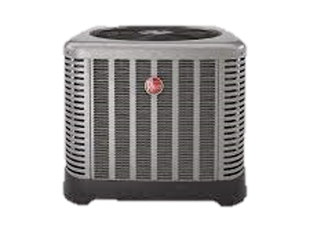
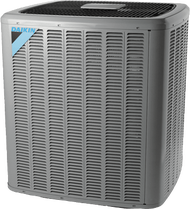
Central Air Conditioning Systems
Central air conditioning systems include traditional air conditioners and both air- and water-source heat
pumps. Distribution of
cooling is almost always by way of cooled air through ducts. Ducts must be well sealed.
Studies throughout the country indicate duct leakage significantly
reduces delivered efficiency of heating and
cooling systems.
Sealing with duct tape is not satisfactory because most duct tapes fail soon after installation. The duct installer must use a mastic-type sealant or at a minimum, foil backed tape at all joints. Return ducts must also be sealed. Return air ducts are often constructed by encasing a standard building cavity with sheet metal or gypsum board. The space between floor joists is often panned off with sheet metal or sections of interior partitions are covered with gypsum board. Building cavity return air ducts must be sealed, just like supply ducts. It is common to find up to one-inch gaps between the sheet metal and floor joists. A powerful furnace fan creates a strong negative pressure in the return ducts, drawing air from unheated sections of the home.
Because these defects are covered with wallboard, they must be corrected during construction. New techniques in duct sealing allow special airborne mastic to be injected into the ducts where it seeks out and seals most holes. However, it is easier to seal ducts correctly during construction rather than attempt to seal them after the home is finished.
In addition to sealing, supply and return ducts running in the attic or crawl space should be insulated to a minimum R-5. If they are located outdoors, then they should be insulated to at least R-8.
Central air conditioners
One of the most common cooling appliances used in the Plains states is the central air conditioner.
The seasonal performance rating of a central air conditioner is its Seasonal Energy Efficiency Ratio
(SEER). It is the ratio of the cooling delivered from the unit in Btus divided by the power input to
the unit in watts. The minimum available SEER is 10. New standards are being considered that raise the minimum rating available for sale from an SEER of 10 to 12. Ratings of 12 are almost always cost effective and ratings of up to 18 are available. Your supplier can provide ratings for the units under consideration. Ratings for all air conditioners and heat pumps are available from the Air-Conditioning and Refrigeration Institute’s Directory of Unitary Equipment 1 or on-line at www.ari.org/.
Two types of compressors are commonly used in central air conditioners and heat pumps. For years, all compressors were of the reciprocating type. Improvements in manufacturing technologies have allowed the inexpensive manufacture of scroll compressors. Scroll compressors are more rugged, tolerant of liquid refrigerant slugs, and quieter than typical reciprocating compressors. Most manufacturers now offer scroll compressors on mid- to high-performance central cooling equipment.
Annual cooling costs for a home equipped with a conventional air conditioner, an air-source heat pump, or a ground-source heat pump are dependent on the heat gain of the home, the cost of electricity, and performance of the unit. To determine annual cooling costs for your home contact K. Kelly or visit the Air-Conditioning and Refrigeration Institute’s Directory of Unitary Equipment.
When purchasing cooling equipment, in addition to energy performance, it is important to examine warranties. Warranties generally range from five years to ten years on the compressor and from one to two years on the remainder of the unit.
Air conditioners with two stages of capacity are available. These units operate at low capacity when the weather is mild and at full capacity when it is hot outside. This two-stage operation offers distinct advantages. The overall energy performance is high and humidity control is excellent because the unit operates more hours.
Need More Information on Cooling and Air Conditioning?
Cooling your home is an important aspect of your family life. To stay cool and comfortable all summer long you'll want to make sure you are choosing the right cooling and air conditioning system for your home and your budget. The air conditioning contractors at K. Kelly offer top of the line cooling and air conditioning systems at affordable prices from trusted brands such as Rheem, Buderus and Climatemaster and provides free air conditioning Price Quotes.
Whether you need air conditioning repairs, service or air conditioner replacement, Call 920-469-3500 today to get your free cooling system quote or central air conditioning questions answered from the Green Bay air conditioning contractors at K. Kelly Inc.
Sealing with duct tape is not satisfactory because most duct tapes fail soon after installation. The duct installer must use a mastic-type sealant or at a minimum, foil backed tape at all joints. Return ducts must also be sealed. Return air ducts are often constructed by encasing a standard building cavity with sheet metal or gypsum board. The space between floor joists is often panned off with sheet metal or sections of interior partitions are covered with gypsum board. Building cavity return air ducts must be sealed, just like supply ducts. It is common to find up to one-inch gaps between the sheet metal and floor joists. A powerful furnace fan creates a strong negative pressure in the return ducts, drawing air from unheated sections of the home.
Because these defects are covered with wallboard, they must be corrected during construction. New techniques in duct sealing allow special airborne mastic to be injected into the ducts where it seeks out and seals most holes. However, it is easier to seal ducts correctly during construction rather than attempt to seal them after the home is finished.
In addition to sealing, supply and return ducts running in the attic or crawl space should be insulated to a minimum R-5. If they are located outdoors, then they should be insulated to at least R-8.
Central air conditioners
One of the most common cooling appliances used in the Plains states is the central air conditioner.
The seasonal performance rating of a central air conditioner is its Seasonal Energy Efficiency Ratio
(SEER). It is the ratio of the cooling delivered from the unit in Btus divided by the power input to
the unit in watts. The minimum available SEER is 10. New standards are being considered that raise the minimum rating available for sale from an SEER of 10 to 12. Ratings of 12 are almost always cost effective and ratings of up to 18 are available. Your supplier can provide ratings for the units under consideration. Ratings for all air conditioners and heat pumps are available from the Air-Conditioning and Refrigeration Institute’s Directory of Unitary Equipment 1 or on-line at www.ari.org/.
Two types of compressors are commonly used in central air conditioners and heat pumps. For years, all compressors were of the reciprocating type. Improvements in manufacturing technologies have allowed the inexpensive manufacture of scroll compressors. Scroll compressors are more rugged, tolerant of liquid refrigerant slugs, and quieter than typical reciprocating compressors. Most manufacturers now offer scroll compressors on mid- to high-performance central cooling equipment.
Annual cooling costs for a home equipped with a conventional air conditioner, an air-source heat pump, or a ground-source heat pump are dependent on the heat gain of the home, the cost of electricity, and performance of the unit. To determine annual cooling costs for your home contact K. Kelly or visit the Air-Conditioning and Refrigeration Institute’s Directory of Unitary Equipment.
When purchasing cooling equipment, in addition to energy performance, it is important to examine warranties. Warranties generally range from five years to ten years on the compressor and from one to two years on the remainder of the unit.
Air conditioners with two stages of capacity are available. These units operate at low capacity when the weather is mild and at full capacity when it is hot outside. This two-stage operation offers distinct advantages. The overall energy performance is high and humidity control is excellent because the unit operates more hours.
Need More Information on Cooling and Air Conditioning?
Cooling your home is an important aspect of your family life. To stay cool and comfortable all summer long you'll want to make sure you are choosing the right cooling and air conditioning system for your home and your budget. The air conditioning contractors at K. Kelly offer top of the line cooling and air conditioning systems at affordable prices from trusted brands such as Rheem, Buderus and Climatemaster and provides free air conditioning Price Quotes.
Whether you need air conditioning repairs, service or air conditioner replacement, Call 920-469-3500 today to get your free cooling system quote or central air conditioning questions answered from the Green Bay air conditioning contractors at K. Kelly Inc.